
INDIVIDUALIZED VETERINARY CARE
Acupuncture
Veterinary acupuncture selected as part of a thoughtful, individualized treatment plan.
Discuss a visit →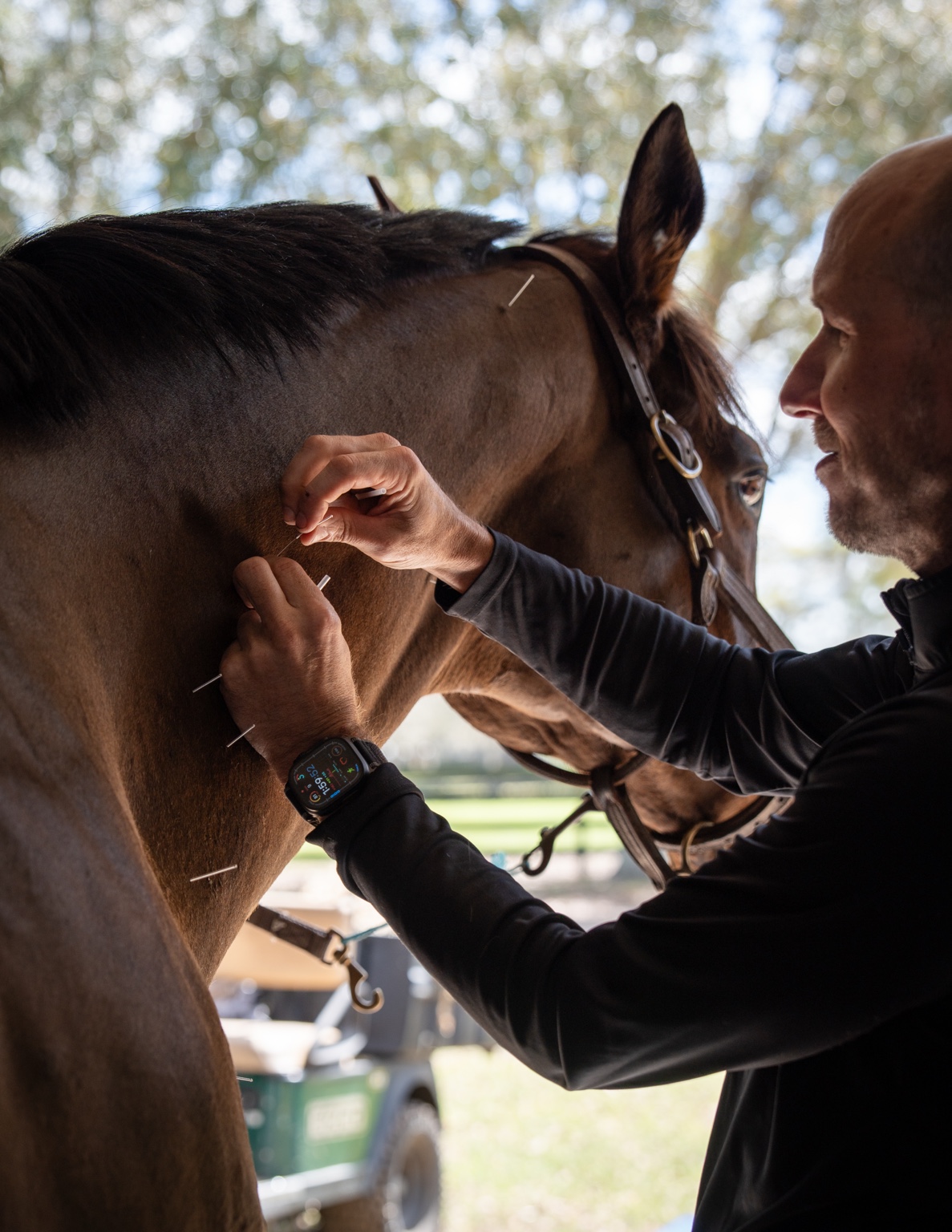
What is veterinary acupuncture?
Veterinary acupuncture uses fine needles at selected points. A session may also include controlled electrical stimulation or another acupuncture technique, depending on the findings.
How does it work?
Needle stimulation activates sensory nerves and can influence how the nervous system processes pain. Electroacupuncture adds a controlled electrical stimulus through selected needles.
When do we use it?
We may consider acupuncture as part of a plan for musculoskeletal discomfort, including neck or back soreness. Dr. Seitz uses the history and exam to select the technique and decide how to assess your horse’s response.
OUR PERSPECTIVE
A treatment plan guided by your horse’s exam.
Dr. Seitz incorporates acupuncture according to the findings of the veterinary assessment and your horse’s needs. Options include dry needling, electroacupuncture, and aqua-acupuncture. The approach is discussed with you before treatment.
Dr. Seitz completed his acupuncture certification at Chi University.
WHAT TO EXPECT
Review of your horse’s history and goals
Veterinary assessment before treatment
Selection of an appropriate acupuncture technique
Discussion of response and follow-up
Acupuncture techniques
Dry needling+
Fine needles are placed at selected acupuncture points.
Electroacupuncture+
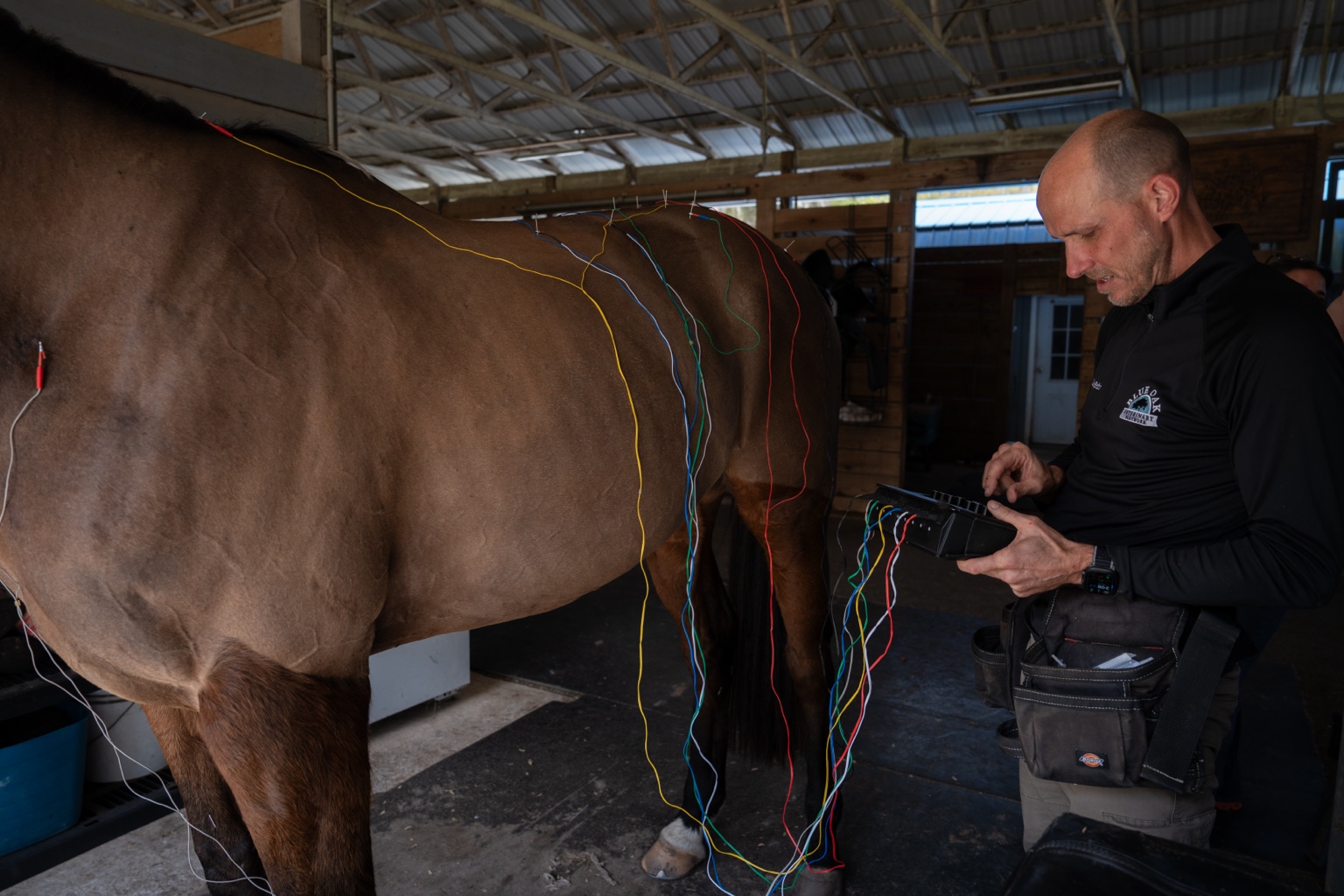
Selected needles are connected to a device that delivers controlled electrical stimulation.
Aqua-acupuncture+
A small amount of fluid is injected at selected acupuncture points.
What the needles and leads are for
During an acupuncture visit, Dr. Seitz selects points after reviewing your horse’s history and completing an exam. Dry needling uses fine needles alone. With electroacupuncture, leads connect selected needles to a device that delivers controlled electrical stimulation. Your horse’s response helps guide the session.
Do I need to choose an acupuncture technique when I book?
Tell us what you’re noticing and what you hope to address. Dr. Seitz will explain which approach fits the exam findings and what it would involve before treatment.
THE NEXT CHAPTER STARTS HERE